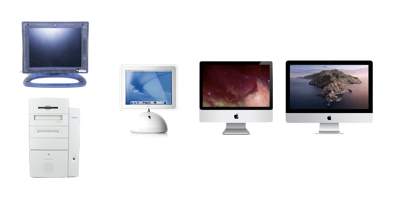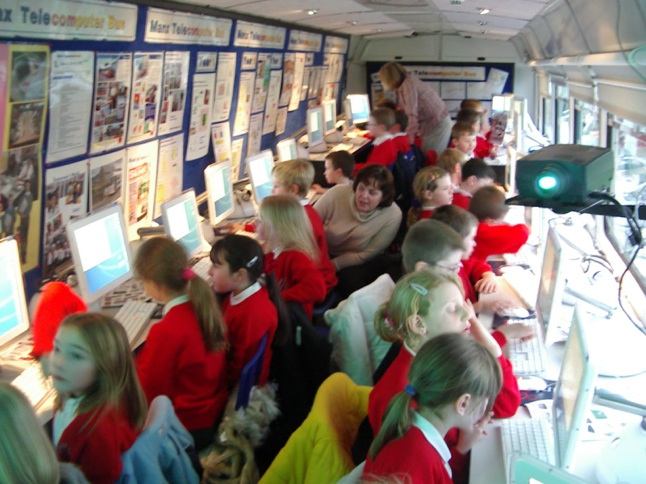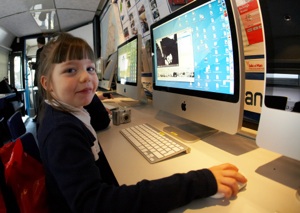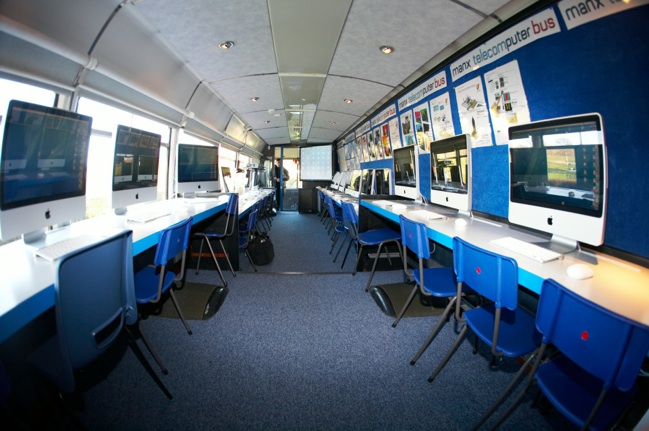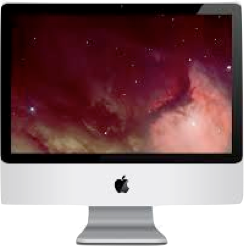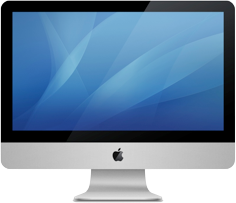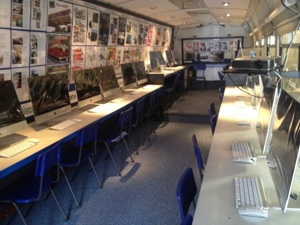

FOUR generations of Macintosh computers earned their keep on board the computer bus - going for further use elsewhere.

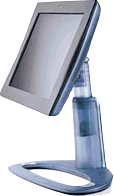
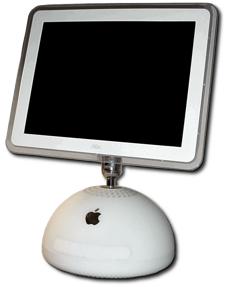
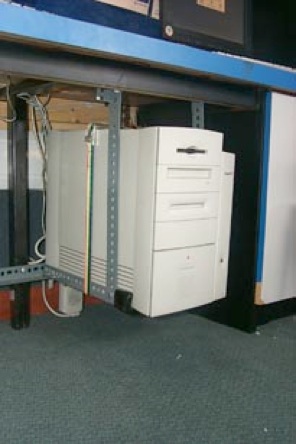
L to R: G3 minitower with studio display; G4 iMac; 1st gen aluminium unibody iMac; later ‘thin’ aluminium iMac.

©2020 Isle of Man Department of Education Sport and Culture All Rights Reserved

1998

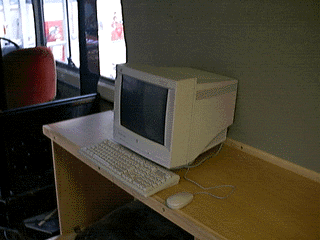
“The Apple Studio Display (LCD), introduced with the non-colour matched Power Macintosh G3/300 DT and Power Macintosh G3/300 MT, features a 15.1" viewable area active-matrix LCD display perched upon a dark blue adjustable stand with integrated ADB and S-Video in ports. Although sales were modest, this display initiated the transition from CRT-based to LCD-based displays.”

everymac.com

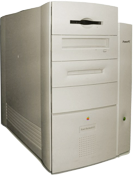
“The Apple Power Macintosh G3/300 Minitower, based on the compact Gossamer architecture, features a 300 MHz PowerPC 750 (G3) processor with 1 MB of backside cache, 64 MB or 128 MB of RAM, a 4.0 GB or 8.0 GB hard drive, a 24X CD-ROM drive, ATI 3D Rage II+ or Rage Pro (starting May 1, 1998), or Rage Pro Turbo (after August 12, 1998) graphics acceleration with 6 MB of VRAM (some configurations offer additional VRAM on a PCI card), and either the "Whisper personality card" with audio input/output or the "Wings personality card" with audio/video input/output -- all packed into an easily expandable minitower case.

The Power Macintosh G3 models were the first Apple Macs to use the "third-generation" (G3) PowerPC 750 processor which also unveiled a new "backside" level 2 cache for a substantial performance boost compared to earlier systems using a "lookaside" level 2 cache.”

everymac.com

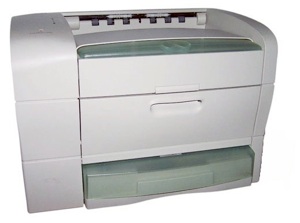
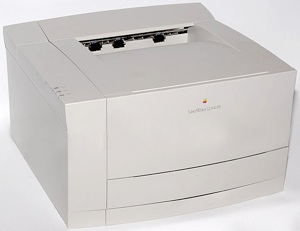
The Apple LaserWriter 8500 offered 600 dpi and up to 20 A4 monochrome pages per minute. It could also produce A3 prints.

It was fast, reliable, economical and VERY HEAVY.

This machine appeared on the bus around January 1999 and replaced the earlier (but slower) Apple LaserWriter 12/640 PS.

When smaller, lighter colour printers became affordable, the LaserWriter was transferred to a school to end its days.

(DID WE SAY IT WAS VERY HEAVY?)


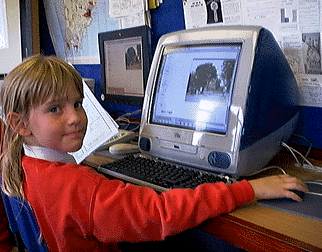
Introduced in May 1998 and shipped in the middle of August the same year, it was not long before the ‘futuristic’ iMac found its way onto the Isle of Man and at least as early as 22nd October 1998 as this picture of one  on the bus at Ashley Hill School shows.

It was never the intention to equip the bus with this first generation iMac (it had brand new G3 minitowers). The idea was simply to trial the machine prior to placing bulk orders for primary schools.

ABOVE: Probably the first printer on the computer bus was an Apple LaserWriter 12/640 PS (for Post Script yey!). Unlike the pioneering 300dpi LaserWriters from Apple, the dots per inch had gone up to 600 at 12 pages per minute. Monochrome of course...

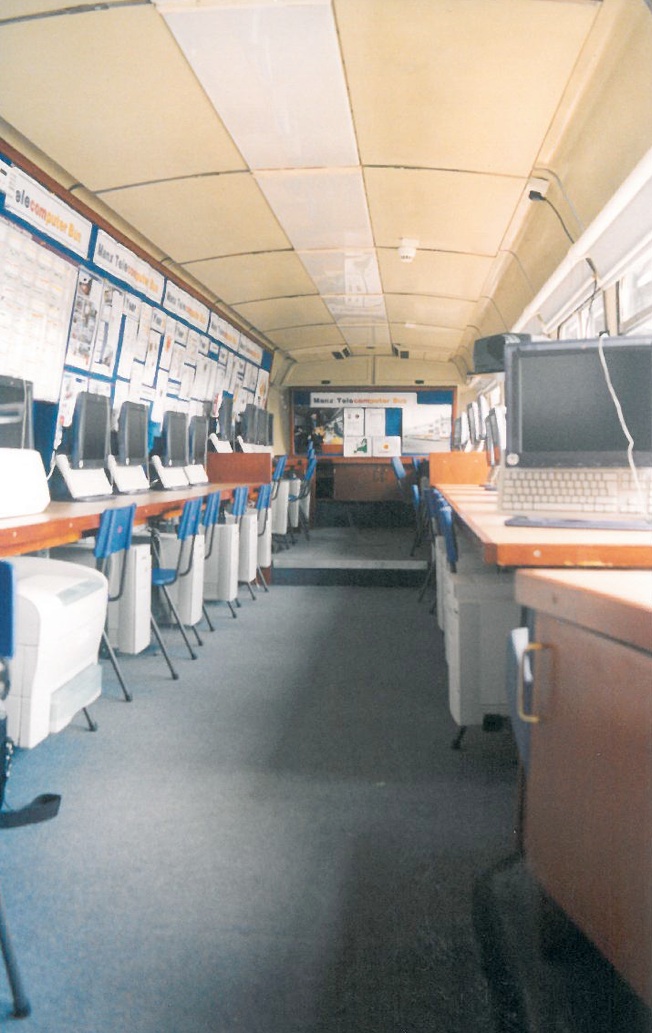
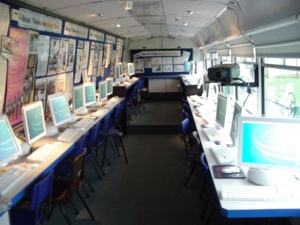
ABOVE: An early view of the computer bus interior taken circa January 1999, At this time the G3 mini towers had been mounted on the DEXION racking (see also above), The mis-match between the beige mini towers and their keyboards and mouses, and the see-though STudio displays is quite evident. At this stage the bus featured the original ‘nicotine’ coloured Leyland National interior, and the wood veneer benching and cupboards. It wasn’t until the end of 2001 that the bus was considered a sufficiently ‘permanent’ feature that the interior received a significant makeover. Note the LaserWriter 8500 on the left hand side of this view.

CD Drive

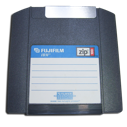
The Zip drive was a removable floppy disk storage system introduced by Iomega in late 1994. Considered medium-to-high-capacity at the time of its release, Zip disks were originally launched with capacities of 100 MB, then 250 MB, and then 750 MB.

HD Floppy Disks with a capacity of 1.4MB

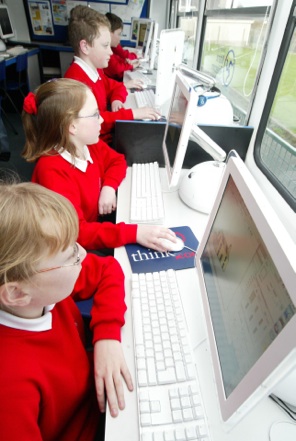
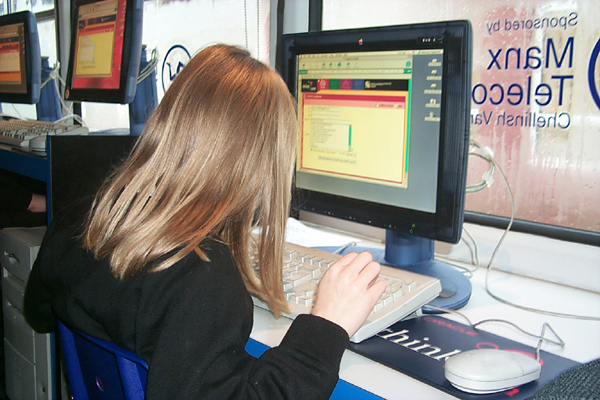
ABOVE: A nice shot of the Studio Displays in use at Cronk-y-Berry School 12th October 1999. Note the think.com mouse mats left over from the Earl’s Court visit of July that year. Interestingly the young lady featured is in fact using think.com running on Internet Explorer.

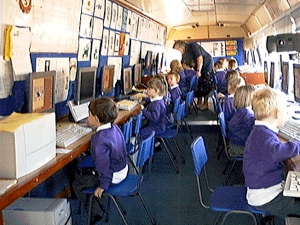
ABOVE: One of the earliest interior general views of the computer bus visiting a school - Ballasalla on 8th October 1998. The LaserWriter is on the left of the view, and had to be lifted on to the floor during travel. The low position of the G3 mini towers and the horizontal strap indicates this was before the installation of the DEXION racks.

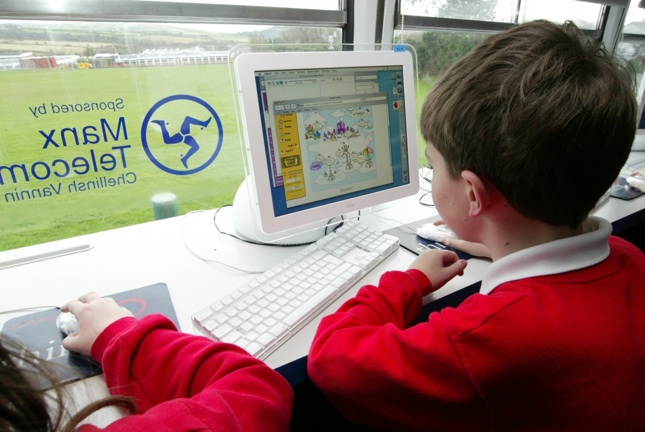
The iMac G4 was introduced in January 2002 and by April that year the computer bus has a set of 23 - 3 more than the 20 G3s fitted originally. The new machines featured 15” LCD screens mounted on an adjustable arm above a hemisphere containing a full-size, tray-loading optical drive and a fourth-generation PowerPC G4 74xx-series processor. The hard drive and motherboard were placed in the "dome" instead of the LCD panel as it would be too heavy. The arm allowed the display to ‘float’ at almost any angle around the dome-shaped bottom.

Amusingly, when first fitted the screens were free to move during transit and would bounce and swing in unison as the bus navigated bumps and bends and swing back on forth on braking and acceleration.  Later, a canvas ribbon was used to anchor the screens whilst travelling between schools.

Like their G3 predecessors, all went on to further use once their time on the bus was up.

2002

2008

The relaunch of the computer bus in January 2008 featured no9t only an exterior restoration and re-spray, but also saw a complete revision of the computer equipment on board.

In August 2007, Apple introduced a complete redesign of the iMac, featuring an aluminium, glass and plastic enclosure. 24 were purchased for the computer bus, and a single hole drilled in the foot allowed them to be secured firmly to the desktops. An opportunity to fit a new carpet.

These machines were incredibly reliable and longest lived computers on the bus lasting six years. All found new homes following replacement in July 2014, and some were still in use elsewhere following the discontinuation of the computer bus in March 2020.


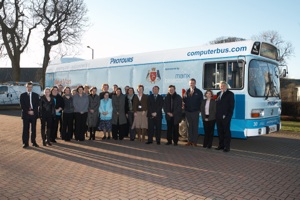
ABOVE: MANX TELECOM staff lined up in front of the refurbished computer bus in December 2007.

ABOVE: The official relaunch of the bus on Wednesday 23 January 2008 featured children from all over the Island. Also in attendance was the Chief Minister Tony Brown, President of Tynwald Noel Cringle and Education Minister Anne Craine.

ABOVE: The official interior view of the refurbished computer bus December 10th 2007.

It came as a surprise when in July 2014 a new set of iMacs were ordered for the computer bus. It turned out to be fortuitous as the bus was to have a further SIX years of service so the new machines were to see plenty of use.

The new machines looked similar in many ways to the previous ones from 2008, but were considerably thinner and much, much lighter.

They fitted exactly into the spaces occupied by their predecessors and are bolted down as before.

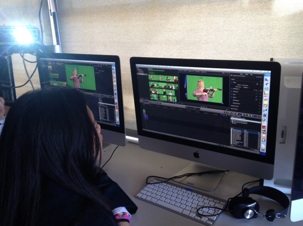
The new equipment also saw the installation of Apple’s FInal Cut X. It was hoped at the time that that this would be followed by other ‘pro’ software to help extend the opportunities available to older children as they progressed from ‘consumer’ and educational applications which have been available on the bus until now. Unfortunately that did not happen, but FCX saw plenty of use meantime.

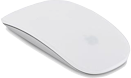
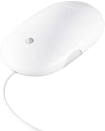
The new machines also came with Apple’s ‘Magic Mouse’ (BELOW LEFT) an intuitive cross between a trackpad and a mouse, and ideal for everything from web browsing to intricate graphic design.  Despite being a joy to work with, issues with the replaceable AA battery mounting and resultant loss of Bluetooth contact became a chronic problem and in 2018 the mice had to be replaced by an earlier generation of wired mouse (BELOW RIGHT).

2014

ABOVE: Still with their protective screen coverings, the new iMacs on the bus outside the Pulrose ICT centre on July 1st 2014.

ABOVE: Final Cut X in use at Ballakermeen High School July 3rd 2014.

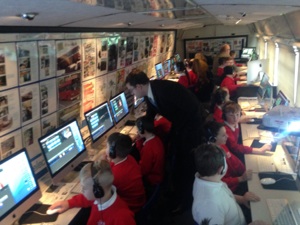
ABOVE: Still in use at Bunscoill  Rhumsaa in January 2020. These machines proved 100% reliable during their 6 years on board the computer bus.

Magic Mouse

Mighty Mouse